

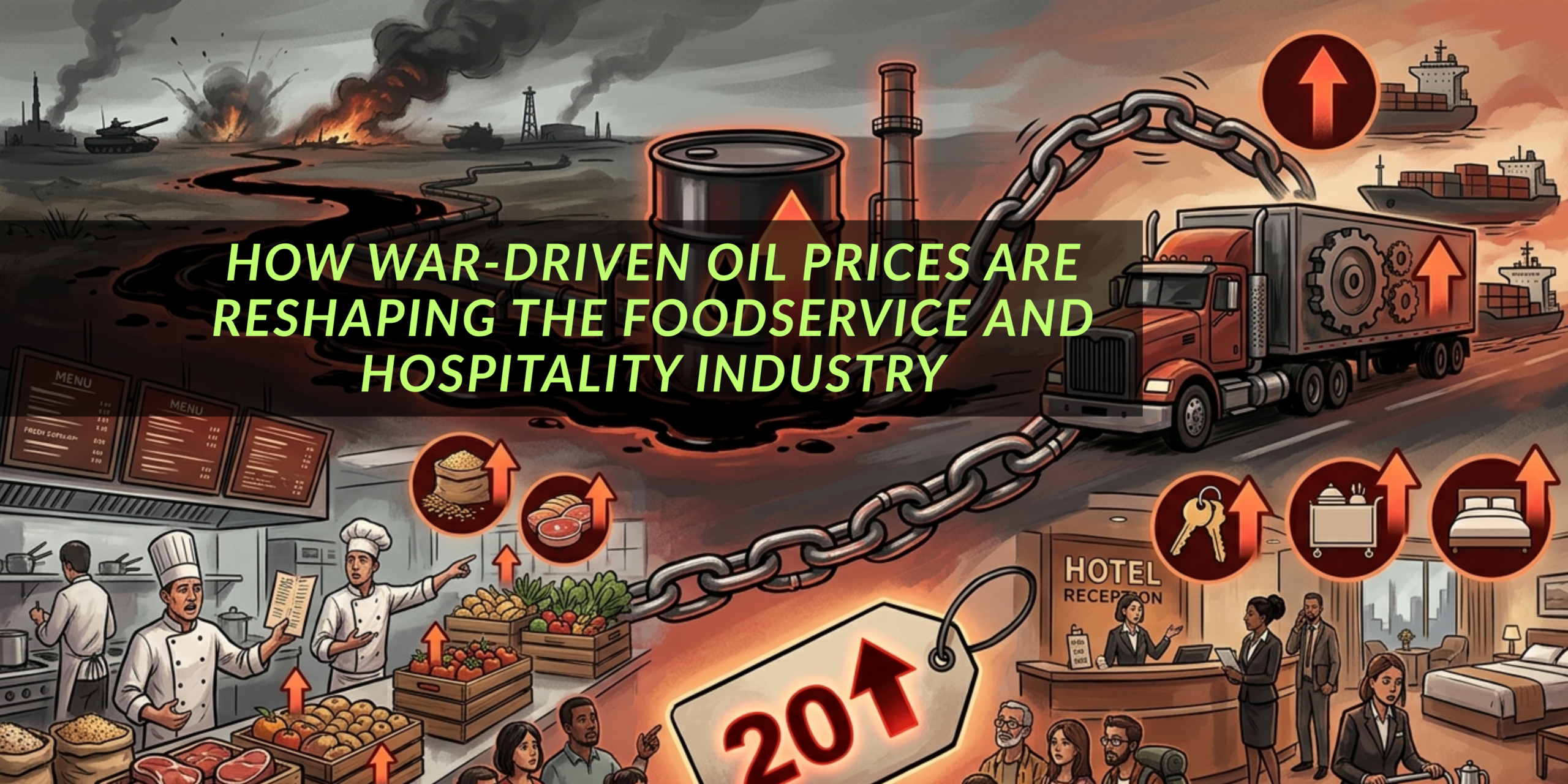
Geopolitical conflict in the Middle East is once again exposing one of the global economy’s biggest vulnerabilities, oil dependency. With tensions disrupting key shipping routes and pushing oil prices higher, the ripple effects are already being felt across international markets.
For South Africa’s foodservice and hospitality industry, this is not a distant geopolitical issue. It has direct and immediate consequences for operating costs, supply chains, travel demand, and consumer spending.
Fuel Costs Will Drive Immediate Operational Pressure
South Africa imports the majority of its fuel, which means local fuel prices are highly sensitive to global oil price movements and exchange rate fluctuations.
When oil prices rise, South African operators face a double impact. Higher global oil prices increase the base cost of fuel, while a weakening rand can amplify the final price at the pump.
For restaurants, hotels, and catering operations, this translates into rising costs across key operational areas, including transportation, supplier logistics, food deliveries, and refrigeration.
Distributors pass on higher fuel costs, delivery charges increase, and operators are forced to absorb expenses that move far faster than menu prices can realistically adjust.
Margins, already tight in the hospitality sector, come under immediate pressure.
Food Inflation Will Follow Quickly
Energy costs are deeply embedded in the food production system.
Higher oil prices increase fertiliser costs, raise farming expenses, and drive up the price of processing, packaging, and transportation. These cost increases move quickly through the supply chain.
South Africa has already experienced significant food inflation over the past two years, and another oil-driven shock could place renewed pressure on key food categories such as grains, dairy products, fresh produce, and meat.
For foodservice operators, the challenge becomes clear. Absorb the cost increases and reduce profitability, or adjust menu pricing and risk losing customers in a highly price-sensitive market.
Tourism and Travel Will Feel the Pressure
South Africa’s hospitality industry is closely tied to both domestic and international tourism.
Rising oil prices increase jet fuel costs, which directly affects airline pricing. Higher airfares often lead to reduced travel demand, particularly for long-haul destinations.
International visitors may delay travel plans or shorten trips, while domestic travellers may become more cautious about discretionary spending.
For hotels, resorts, and restaurants that rely heavily on tourism, this creates additional uncertainty around occupancy rates, booking patterns, and seasonal demand.
Consumers Will Become More Price Sensitive
Fuel price increases quickly translate into broader inflation across the economy.
As the cost of living rises, South African households face higher transport costs, more expensive groceries, and increased financial pressure. This reduces disposable income and changes spending behaviour.
Dining out becomes more selective. Consumers visit restaurants less frequently, spend less per visit, and increasingly look for value-driven options.
While premium and luxury establishments may remain relatively resilient, mid-market restaurants and casual dining operators are likely to feel the greatest pressure.
The Challenge Is Cost Escalation, Not Supply Shortages
Unlike previous global disruptions, the current environment is not expected to create major food shortages.
Supply chains remain operational, and products will still be available. The real challenge is sustained cost escalation across nearly every part of the value chain.
Fuel, food inputs, logistics, utilities, and imported goods all become more expensive at the same time.
For operators, managing these overlapping cost pressures becomes one of the most significant business challenges.
What This Means for Foodservice and Hospitality Leaders in South Africa
In this environment, operational efficiency alone is no longer enough. Strategic adaptation becomes essential.
Menu engineering plays a critical role in protecting margins. Supplier relationships need to be carefully managed and diversified. Energy efficiency becomes not just a sustainability goal but a financial necessity.
Pricing strategies must strike a delicate balance, protecting profitability while remaining accessible to increasingly price-conscious consumers.
Businesses that respond quickly and strategically will be far better positioned to navigate the volatility.
The Bottom Line
Rising oil prices driven by geopolitical conflict are creating a new wave of economic pressure across the global economy.
For South Africa’s foodservice and hospitality industry, the impact is clear. Operating costs are rising, consumer spending is tightening, and travel demand is becoming less predictable.
In this environment, success will depend on agility, strategic decision-making, and the ability to adapt to rapidly shifting market conditions.
Operators who anticipate these changes and adjust their business models accordingly will not only weather the pressure but emerge stronger in the long term.
