
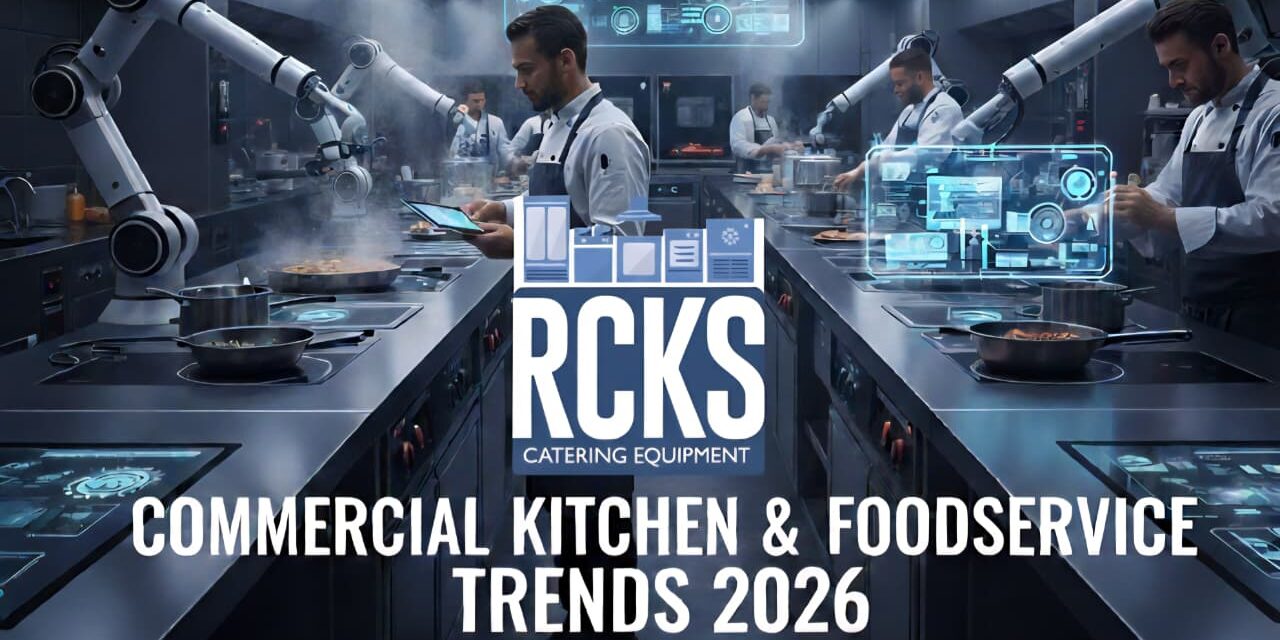
The restaurant, hospitality and foodservice industries are evolving faster than ever, and at the centre of it all is the commercial kitchen. In 2026, the kitchen is no longer just a space for cooking, it is a connected, sustainable and intelligent environment that drives performance, consistency and profitability.
Whether you operate a restaurant, hotel, catering business or large food production facility, understanding how kitchens are transforming is essential to staying competitive.
Smart Technology and Connected Kitchens
Technology is reshaping the heart of the foodservice industry. Today’s commercial kitchens are equipped with smart appliances that monitor, learn and optimise performance automatically. From ovens that record recipes and cooking times, to fridges that alert you when temperatures change, every function is becoming data-driven and precise.
At RCKS, we have seen how connected equipment allows kitchen operators to track efficiency, reduce downtime and maintain consistent quality across multiple sites. Cloud-based systems are giving chefs and managers real-time visibility of their operations, no matter where they are.
Why it matters
- Fewer equipment breakdowns
- Better food quality and consistency
- Lower maintenance and energy costs
Sustainability and Energy Efficiency
Sustainability is no longer a trend, it is a requirement. The modern commercial kitchen focuses on energy efficiency, waste reduction and responsible design that protect both the environment and the bottom line.
Innovations like induction cooking, high-efficiency ovens and heat-retention holding units are helping kitchens lower their energy consumption. In South Africa, where electricity costs and load-shedding remain challenges, efficiency translates directly into savings and resilience.
Key sustainability moves for 2026
- Choose low-energy cooking equipment
- Incorporate heat recovery and recycling systems
- Monitor energy use through smart controls
At RCKS, we provide brands that lead this sustainability shift, helping operators reach their environmental goals while improving productivity.
Modular and Flexible Kitchen Layouts
The new era of foodservice demands flexibility. Hybrid models such as ghost kitchens, delivery-only operations and multi-brand spaces are redefining how kitchens are planned. The solution lies in modular kitchen systems that allow quick changes to layout, workflow and service style.
A modular kitchen design allows operators to expand or adapt without costly renovations. Whether you need to increase prep space during peak hours or create a delivery zone, flexibility ensures long-term efficiency and faster return on investment.
Why modular kitchens matter
- Easier installation and future upgrades
- Adaptable for new menus or service styles
- Improved workflow and productivity
Staff Wellbeing and Ergonomic Design
A successful kitchen is powered by people. With global staff shortages and growing pressure on retention, kitchens are being designed with ergonomics and wellbeing in mind.
Ergonomic workstations, automated cooking systems and intelligent layouts reduce physical strain and make the workspace safer and more efficient. When chefs are comfortable, performance improves and turnover decreases.
Smart design choices include
- Height-adjustable counters
- Strategic placement of storage and prep zones
- Automation for repetitive or heavy tasks
At RCKS, we understand that great equipment is not only about performance, it is also about creating a workspace that inspires and supports the people behind every meal.
Menu Innovation and Changing Consumer Preferences
In 2026, customer demand is shaped by health, sustainability and convenience. Plant-based options, locally sourced ingredients and zero-waste menus are gaining popularity. Kitchens must be ready to adapt their menus quickly, without compromising efficiency or quality.
Smart combi ovens, multifunctional steamers and advanced holding solutions make it easier to experiment with new recipes and meet customer expectations. With delivery and experience dining both rising, versatility in kitchen equipment has never been more important.
The South African Perspective
In South Africa, innovation must align with local realities. Load-shedding, rising energy costs and supply challenges make efficiency and durability essential. The best commercial kitchens balance global trends with practical, local solutions.
Energy-saving appliances, modular layouts and smart monitoring systems are helping South African operators remain productive and profitable, even during challenging conditions. RCKS works with leading international brands to bring these solutions to local businesses, ensuring world-class performance that suits the South African market.
Final Thoughts
The commercial kitchen of 2026 is intelligent, adaptable and sustainable. Businesses that invest in smart technology, energy efficiency, flexible layouts and staff wellbeing will lead the next chapter of the hospitality and foodservice industry.
At RCKS, we help clients design and equip kitchens that are future-ready, reliable and built for growth. By combining innovation with practical experience, we ensure every kitchen performs at its best, today and in the years ahead.
Ready to future-proof your kitchen for 2026?
Explore our professional kitchen equipment at www.rcks.co.za or contact our team for expert advice on designing and upgrading your foodservice operation.